Dental Implants
A dental implant is a procedure that involves a metal fixture (usually a screw) being fixed into the jawbone, which then acts as an anchor for a new false tooth.
phone Book Your VisitA dental implant is a procedure that involves a metal fixture (usually a screw) being fixed into the jawbone, which then acts as an anchor for a new false tooth.
phone Book Your VisitDental implants have been instrumental in advancing dentistry over the last few decades. They are widely regarded as a popular solution for replacing missing teeth. These artificial structures are placed into the jawbone where teeth are missing. Dental implants are designed to look, feel, and function similarly to natural teeth. In the following sections, we will cover key information about dental implants.
Highly skilled dentists and dedicated staff
If you are considering getting dental implants, you can benefit from the following –
1. Improved appearance : Since dental implants feel and look like your natural teeth, they can help in markedly enhancing your appearance.
2. Better speech : Dentures can often cause you to slur or mumble your words. With dental implants, however, you will be able to speak more clearly.
3. Improved comfort : Dental implants are designed to fuse with the jawbone, which makes them a permanent solution. You do not experience any kind of discomfort which is usually associated with a denture.
4. Makes eating easier : Dental implants essentially work like your natural teeth, which makes it easier to eat your favourite food without pain.
5. Better oral health : Since there are no alterations done to the nearby teeth to support the implant, most of your original teeth are left intact. This helps in improving your oral health in the long term. Individual implants also make it easier to clean between the teeth, thereby improving oral hygiene.
Dental implants offer numerous benefits, including restoring the ability to chew, enhancing cosmetic appearance, reducing jawbone shrinkage from bone loss, supporting the health of surrounding bone and gums, and maintaining the stability of nearby teeth. Ideal for those missing individual teeth who prefer not to wear dentures, dental implants from K Family Dental Clinic can help you talk, laugh, eat, and chew with confidence. With consistent care, they are designed for long-lasting results. At K Family Dental, we prioritise our patients’ well-being by providing thorough pre- and post-surgical guidance to support effective healing. Visit us at Chatswood Village, New South Wales, to learn more about our services and book an appointment.
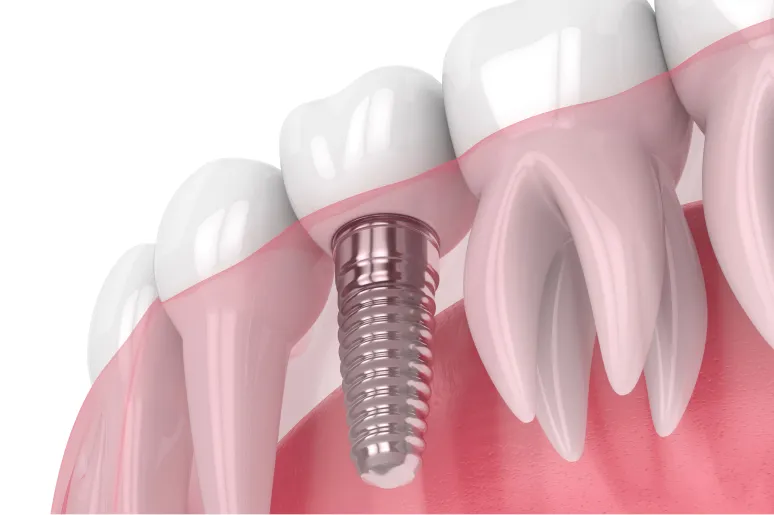
A dental implant is a titanium post designed to act as an artificial root for a missing tooth. It is surgically placed into the jawbone, where it bonds with the bone (osseointegration) to provide a solid foundation for a custom-made crown, bridge, or denture.
Most healthy individuals are candidates for dental implants. You need to have sufficient jawbone density to support the implant and healthy gum tissue. If you have lost bone due to tooth loss or periodontal disease, a bone grafting procedure might be necessary to make you eligible.
Placing an implant is generally not painful because the area is numbed with local anaesthetic. While you may feel some pressure during the procedure, you should not feel pain. Afterwards, mild bruising, swelling, and discomfort are normal, but manageable with over-the-counter medication.
With proper oral hygiene—including daily brushing and flossing—and regular check-ups, dental implants can last a lifetime. They do not decay like natural teeth.
The main advantages are:
Patients generally experience significantly reduced postoperative pain, swelling, and faster healing. Because the procedure is less traumatic, there is less inflammation and a lower risk of long-term complications.
The process typically takes three to six months, depending on healing times and if you require preparatory work like bone grafting. The initial healing phase (when the implant fuses to the bone) usually takes about three months.
If your jawbone is not thick enough or is too soft, you may need a bone graft before the implant can be placed. Modern techniques have made implants possible for many people who were previously told they were not candidates.
Treat them like natural teeth. Regular brushing, flossing, and professional cleaning visits to your dentist are essential to maintain the health of the surrounding gums.
While success rates are very high (above 90-95%), risks can include infection, damage to surrounding teeth, nerve damage, or implant failure if the bone does not fuse properly. Smoking, diabetes and autoimmune disease is a significant risk factor that increases the chance of failure.
Costs vary widely depending on the number of implants, the need for bone grafting, and the type of crown used. In Australia, a single, straightforward implant can range from $3,000 to $7,000+. It is best to get a personalized assessment from your dentist.
---
QA Section
Regular check-ups are essential to prevent problems, detect issues like cavities in their initial stages, and maintain gum health. Furthermore, it is not possible to completely remove tartar at home; dentists use specialised tools to clean hard-to-reach areas below the gum line to maintain optimal oral health.
Dental plaque is a sticky layer formed by bacteria, saliva, food particles, and dead cells that can damage enamel and lead to tooth decay. If left untreated, plaque hardens into tartar, which harbours bacteria and can cause gingivitis and periodontitis.
If untreated, gum inflammation (gingivitis) can progress to periodontitis, an advanced form of gum disease that damages the bone supporting the teeth, potentially resulting in loose teeth.