Root Canal Therapy
A root canal is a dental procedure where the tooth’s infected or damaged pulp is removed and replaced with a root filling.
phone Book Your VisitA root canal is a dental procedure where the tooth’s infected or damaged pulp is removed and replaced with a root filling.
phone Book Your VisitA diseased tooth pulp may cause inflammation or infection. The symptoms of a damaged or diseased tooth pulp may include:
Sometimes, tooth pulp may become damaged or diseased without any symptoms. In these cases, the problem is usually diagnosed by special tests or x-rays during a dental check-up or treatment for other dental concerns.
Highly skilled dentists and dedicated staff
Root canal treatment is needed when dental X-rays show that the pulp has been damaged by a bacterial infection.
The pulp may become inflamed if it’s infected by bacteria, allowing the bacteria to multiply and spread.
The symptoms of a pulp infection include:
As the infection progresses, these symptoms often disappear as the pulp dies.
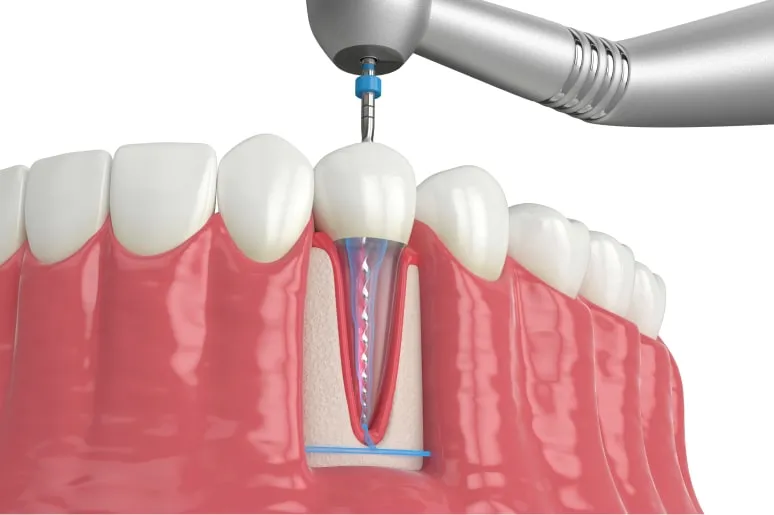
Your tooth may appear to have healed temporarily, but the infection could continue spreading through the root canal system if untreated.
You may eventually experience further symptoms, such as:
It’s important to see your dentist if you develop toothache. If your tooth is infected, the pulp cannot heal by itself. Leaving the infected tooth untreated may worsen the condition.
Root canal treatment is most effective when performed before the infection becomes established.
Book an appointment for root canal therapy at K Family Dental today!
It is a root canal procedure performed using a high-powered dental operating microscope (DOM). The microscope provides 3x to 30x magnification and bright, co-axial lighting, allowing the endodontist to visualize the intricate internal structure of the tooth, including tiny, hidden, or calcified canals, in high definition.
While conventional treatment relies on the naked eye, loupes, or tactile sense, microscopic RCT provides a vastly superior view.
The root canal system is complex and, in some areas, as thin as a human hair. Missed canals are a primary cause of failed root canals and persistent infection. The microscope ensures all canals are thoroughly cleaned and disinfected, greatly increasing the success rate.
No. Microscopic root canals are performed under local anesthesia, just like traditional root canals. Because the dentist can work more efficiently, the time spent in the chair is often reduced.
It is especially crucial for complex cases, such as:
While the initial cost may be higher than a traditional root canal due to the advanced technology, it is often more cost-effective in the long run because it prevents the need for future retreatment or tooth extraction.
Not necessarily. The enhanced visualization allows for greater efficiency, though sometimes the ability to find complex, hidden, or extra canals might lead to a more thorough (and thus potentially longer) procedure, ensuring the tooth is saved correctly the first time